Biblical & Doctrinal Studies
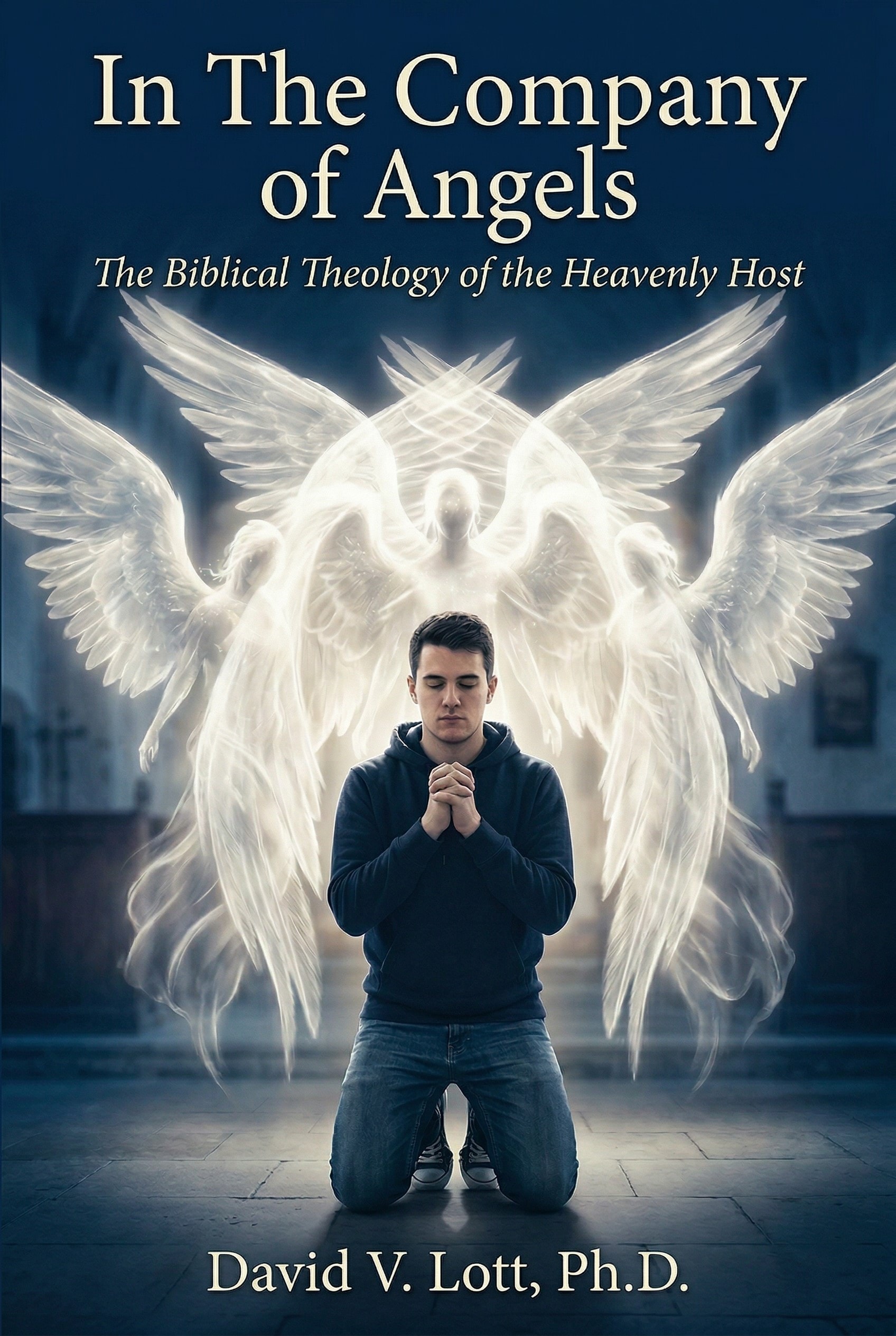
In the Company of Angels
The Biblical Theology of the Heavenly Host
The biblical story unfolds within a creation far more populated than the world visible to human eyes.
From Genesis through Revelation, Scripture repeatedly draws back the curtain on a heavenly realm inhabited by beings who worship before the throne of God, carry His messages, execute His judgments, protect His servants, participate in spiritual conflict, and observe the unfolding drama of redemption.
In the Company of Angels follows these appearances across the biblical canon in order to develop a theology of the heavenly host grounded in Scripture rather than speculation. The result is not simply a study of angels, but a broader exploration of the unseen creation and its place within the sovereign purposes of God.
The Central Question
What Did the Biblical Writers Understand About the Heavenly Realm?
Modern readers often approach Scripture with their attention fixed almost entirely upon the visible world. The biblical writers did not share that limitation. Their understanding of creation included a heavenly realm populated by spiritual beings who existed under the authority of God and participated in His administration of creation.
Angels appear throughout that story, but they are only part of a much larger biblical picture. Scripture speaks of cherubim, seraphim, the host of heaven, living creatures, heavenly messengers, rulers and authorities, and other spiritual beings whose appearances provide glimpses into an unseen order that the biblical authors regarded as real.
The purpose of In the Company of Angels is to gather those glimpses together and ask what they reveal when read as part of the unified biblical story. Rather than beginning with later traditions or popular assumptions about angels, the study allows Scripture itself to establish the categories and boundaries of the discussion.
To understand the heavenly host is to recover part of the biblical worldview that modern readers can easily overlook.
The Heavenly Host
A Diverse and Ordered Unseen Creation
The English word angel can unintentionally flatten the biblical picture by encouraging readers to place every heavenly being into a single category. Scripture presents something considerably richer. Cherubim appear in connection with the presence and holiness of God; seraphim surround the throne in Isaiah's vision; heavenly hosts participate in worship and divine administration; and other spiritual beings appear within prophetic visions and scenes of heavenly deliberation.
These distinctions do not give us permission to construct elaborate hierarchies beyond what Scripture reveals. They do, however, remind us that the unseen creation possesses an order and complexity that deserves careful theological attention.
The goal is not to satisfy curiosity by filling in what Scripture leaves unsaid, but to take seriously what Scripture has chosen to reveal.
The Government of Heaven
God Rules in the Midst of the Heavenly Host
Some of the most striking passages of Scripture portray God surrounded by a heavenly assembly. These scenes occur in the historical books, the Psalms, the prophets, and ultimately in Revelation. They do not suggest that God requires counselors in the human sense or that His sovereignty is shared with other divine beings. Rather, they reveal a sovereign King who has chosen to administer aspects of His creation through a heavenly order that exists entirely beneath His authority.
Recovering this dimension of the biblical worldview helps explain passages that can otherwise seem unusual to modern readers. The heavenly host is neither independent of God nor equal with Him. These beings exist because He created them, exercise authority because He permits it, and remain accountable to the One who alone possesses absolute sovereignty.
The heavenly court does not diminish the sovereignty of God; it displays the vastness of the creation over which He reigns.
The Work of the Heavenly Host
Messengers, Ministers, Worshipers, and Warriors
As the biblical narrative unfolds, members of the heavenly host appear at critical moments in the purposes of God. They communicate divine messages, protect God's servants, execute judgment, participate in spiritual conflict, minister according to God's direction, and continually offer worship before His throne. Their appearances are particularly prominent when the biblical story reaches moments of significant revelation or transition.
Yet Scripture never encourages its readers to become preoccupied with the heavenly servants themselves. Their importance is derived from the One whom they serve. Even when an angel's appearance overwhelms a human observer, the biblical narrative redirects attention toward the message of God and the purposes He is accomplishing.
Studying these activities allows us to see that God's administration of creation extends beyond what human beings ordinarily perceive, while keeping the focus where Scripture places it—upon God Himself.
The Other Side of the Story
When Created Powers Rebel
The biblical account of the heavenly realm also includes rebellion. Scripture portrays Satan and other hostile spiritual powers as opposing God's purposes, deceiving humanity, accusing God's people, and participating in a conflict that extends beyond the visible world.
This conflict must nevertheless be understood within biblical monotheism. Scripture never presents Satan as God's equal or spiritual warfare as an uncertain contest between competing deities. The rebellious powers remain creatures. Whatever authority they exercise is limited, their opposition occurs within the boundaries of God's sovereignty, and their final judgment is never in doubt.
This perspective provides an important corrective to approaches to spiritual warfare that inadvertently magnify the enemy. The biblical emphasis rests not upon the greatness of the rebellious powers, but upon the absolute supremacy of God and the victory accomplished through Jesus Christ.
The unseen conflict is real, but it never places the sovereignty of God in jeopardy.
The Center of Redemptive History
When the Heavenly Realm Bears Witness to the Son
The activity of angels becomes especially significant around the incarnation, ministry, resurrection, and anticipated return of Jesus Christ. Gabriel announces events surrounding His birth. A multitude of the heavenly host praises God at Bethlehem. Angels minister to Jesus following His temptation, stand ready during the events surrounding His arrest, announce the empty tomb, and appear at His ascension.
These appearances are not incidental decorations around the Gospel story. The heavenly realm bears witness to the entrance of the Son into human history and to the decisive movement of God's redemptive plan.
At the same time, the New Testament carefully distinguishes Jesus from every member of the heavenly host. Hebrews declares the superiority of the Son over the angels, while Colossians identifies Him as the One through whom all things were created, whether visible or invisible. The heavenly beings who astonish human observers are themselves creatures of the Christ whom they serve.
The more clearly we see the greatness of the heavenly host, the more extraordinary becomes the supremacy of the Son who created it.
Heaven Watches
The Heavenly Host Observes What God Is Doing in Humanity
One of the more remarkable themes in the New Testament is that the heavenly realm is not indifferent to the redemption of humanity. Angels rejoice over repentance, desire to look into matters concerning salvation, and appear as observers of God's unfolding purposes among His people. Paul even describes the manifold wisdom of God becoming known to rulers and authorities in the heavenly places through the Church.
This gives human redemption a cosmic dimension that can easily be missed when salvation is understood only as an individual transaction between God and a sinner. What God is accomplishing through Christ and His people displays His wisdom before a much larger audience.
Humanity and angels occupy different places within the created order. Scripture never teaches that deceased human beings become angels. Instead, it reveals something more remarkable: redeemed humanity participates in a work of God that the heavenly host itself observes with interest.
The angels are not the subjects of redemption; they are witnesses to the wisdom of God displayed through it.
From Isaiah to Revelation
The Center of Heaven Is Not the Angels
Scripture's great visions of heaven share a remarkable consistency. Isaiah sees seraphim proclaiming the holiness of the Lord. Daniel witnesses the Ancient of Days seated in judgment amid the heavenly court. John is carried into a vision in which living creatures, elders, angels, and an innumerable heavenly multitude surround the throne.
In every case, the heavenly beings may capture our imagination, but they are not the center of the scene. The throne is.
Revelation brings this emphasis to its fullest expression as the worship of heaven gathers around God and the Lamb. The heavenly host exists within a creation whose ultimate purpose is not to display the magnificence of angels but the incomparable glory of the Creator and Redeemer.
The heavenly host surrounds the throne. The throne explains the heavenly host.
Wonder Without Speculation
Taking the Unseen Realm Seriously Without Going Beyond Scripture
A study of angels inevitably raises questions Scripture does not fully answer. How is the heavenly realm organized? How do spiritual beings interact with the physical world? What occurs beyond those moments when Scripture briefly pulls back the curtain?
In the Company of Angels approaches such questions with deliberate restraint. Where Scripture speaks, its testimony deserves careful attention. Where Scripture remains silent, speculation should not be allowed to assume the authority of revelation.
This principle also guards Christian worship and spirituality. Scripture does not direct believers to seek angelic encounters, pray to angels, summon heavenly beings, or build spiritual practices around them. When John mistakenly falls before an angel in Revelation, he is immediately redirected toward the proper object of worship: God.
A biblical theology of angels should increase our wonder without transferring our attention away from God.
Questions the Book Explores
Recovering the Biblical Worldview
- 01
What does Scripture actually reveal about angels and the heavenly host?
- 02
Does the Bible describe different kinds of heavenly beings, and what can responsibly be said about their roles?
- 03
What do biblical scenes of the heavenly assembly reveal about God's government of creation?
- 04
How should Christians understand Satan and the rebellious spiritual powers without giving them authority Scripture does not?
- 05
What role does the heavenly host play in the incarnation, ministry, resurrection, and return of Jesus Christ?
- 06
What does the existence of the heavenly host teach us about humanity, redemption, the Church, and the supremacy of Christ?
Across the Biblical Canon
Windows Into the Heavenly Realm
Old Testament
- Genesis 3:22–24
- 1 Kings 22:19–23
- 2 Kings 6:15–17
- Psalm 82
- Psalm 103:19–21
Prophets & Gospels
- Isaiah 6:1–7
- Daniel 7:9–14
- Daniel 10:10–21
- Luke 1:26–38
- Luke 2:8–14
New Testament
- Colossians 1:15–20
- Ephesians 3:8–12
- Hebrews 1:1–14
- Hebrews 12:22–24
- Revelation 4–5
The Essence of the Book
"The biblical study of the heavenly host ultimately enlarges our understanding not of angels alone, but of the God whose throne they surround, the purposes they serve, and the Christ before whom all creation will finally bow."
— In the Company of Angels
The unseen realm gives the biblical story a breadth that is easily lost when Scripture is read through an exclusively modern and material perspective. Recovering that dimension does not require speculation. It requires allowing the biblical writers to describe the world as they understood it and following their testimony until, as it repeatedly does, it directs our attention to the sovereignty of God and the supremacy of Jesus Christ.
Continue Exploring
The Biblical World Behind What We See
In the Company of Angels belongs within a larger exploration of how Scripture describes realities that are not always immediately visible to the reader. Other studies examine the personified powers within Romans, the biblical problem of spiritual perception, and the way the biblical writers communicate theological realities through the language and worldview of their own historical setting.
About the Book
In the Company of Angels
The Biblical Theology of the Heavenly Host
David V. Lott, Ph.D.
In the Company of Angels traces the biblical theology of the heavenly host from Genesis through Revelation, examining the varied beings Scripture places within the unseen realm and the roles they occupy within the purposes of God. By considering heavenly worship, divine administration, spiritual rebellion, the ministry of angels, the redemption of humanity, and the supremacy of Jesus Christ, the book seeks to recover an important dimension of the biblical worldview while maintaining the boundaries Scripture itself provides.
View In the Company of Angels on Amazon→