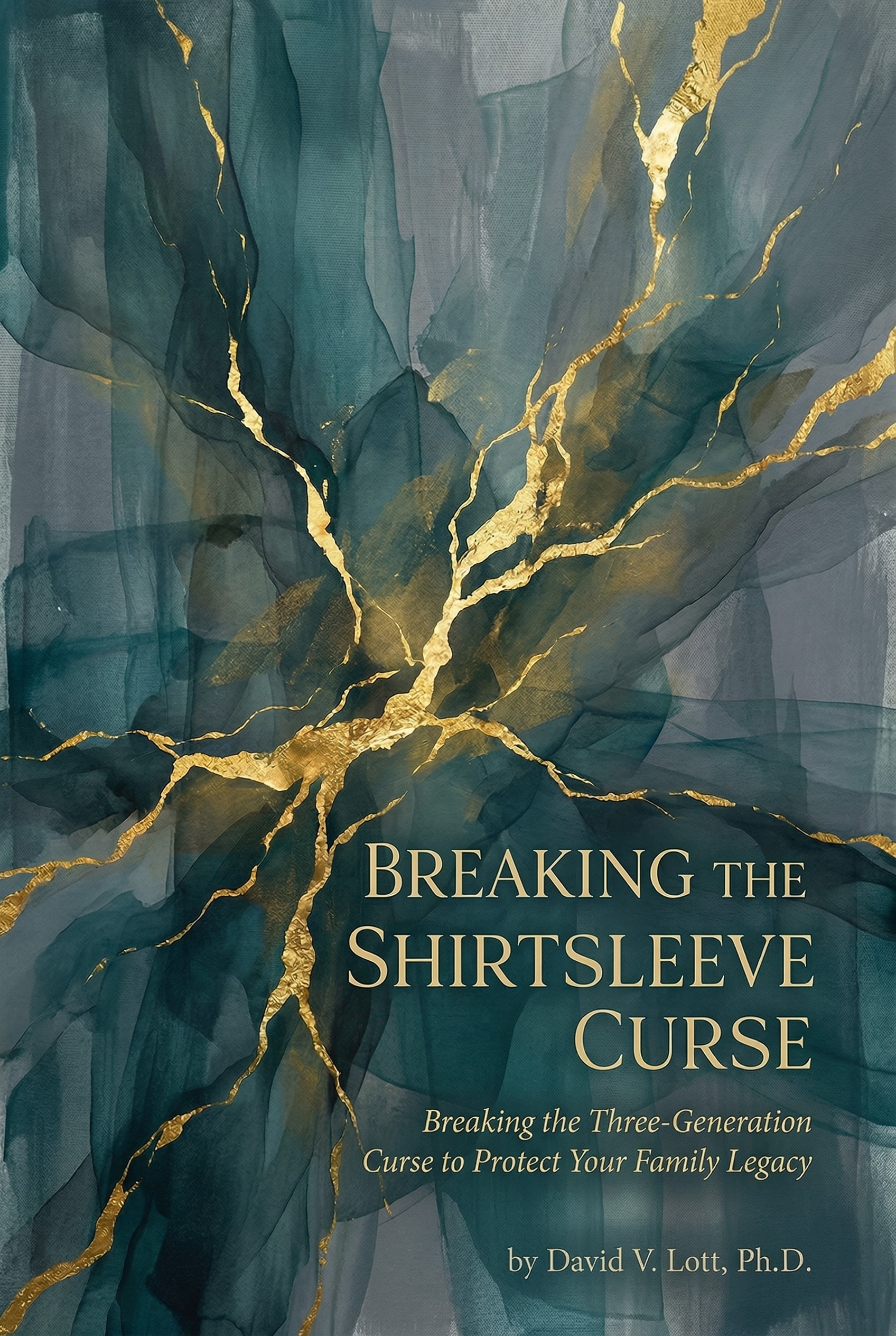
Family · Stewardship · Generational Transition
Breaking the Shirtsleeve Curse
Passing the Torch Without Burning Down the House
Building something of lasting value is difficult. Successfully placing it into the hands of the next generation may be even harder.
Families can spend decades building businesses, accumulating resources, developing relationships, and creating opportunities they hope will benefit their children and grandchildren. Yet history repeatedly demonstrates that wealth and success do not automatically reproduce the character, wisdom, discipline, and sense of purpose that created them.
Breaking the Shirtsleeve Curse examines the difficult transition from one generation to the next and asks how families can prepare both what is being transferred and the people who will eventually receive responsibility for it.
The Central Problem
Why Does Success So Often Disappear Within Three Generations?
The expression commonly known as the "shirtsleeves to shirtsleeves" phenomenon describes a pattern familiar across cultures: one generation builds wealth, the next maintains or expands it, and a later generation loses much of what earlier generations created.
The problem is often described as a failure of financial management, but money alone does not adequately explain it. The generation that builds wealth usually develops certain qualities in the process—discipline, perseverance, adaptability, delayed gratification, tolerance for risk, and an appreciation for the difficulty involved in creating something from very little. Descendants can inherit the results of those qualities without necessarily experiencing the circumstances that produced them.
The challenge of generational transition is therefore not simply how to transfer assets efficiently. It is how to transfer wisdom, responsibility, perspective, and stewardship along with them.
The greatest danger to a family legacy may not be losing what was built, but transferring it without transferring the character required to steward it.
The First Generation
The Qualities That Build Success Are Difficult to Inherit
Builders understand their resources differently because they remember what existed before those resources were available. They remember the uncertainty, long hours, difficult decisions, sacrifices, mistakes, and risks that accompanied the process of creating something worthwhile.
Children and grandchildren enter the story at a different point. What the founder remembers as the result of years of work may simply appear to the next generation as the normal condition of family life. This difference in perspective does not make succeeding generations inferior; it means that they require different preparation.
Wise founders eventually recognize that protecting children from every difficulty can unintentionally protect them from some of the very experiences through which judgment, resilience, and responsibility develop. The objective is not to manufacture hardship unnecessarily, but to ensure that opportunity is accompanied by meaningful responsibility.
The Missing Half of Succession
An Estate Plan Can Transfer Property. It Cannot Transfer Wisdom.
Families appropriately spend considerable time with attorneys, accountants, financial advisors, and other professionals determining how assets should be structured and eventually transferred. That work matters. Tax planning, trusts, estate documents, business succession agreements, and ownership structures can all contribute to an orderly transition.
Yet even the best legal structure cannot make an unprepared person wise. Documents can determine when someone receives control of an asset, but they cannot create judgment, gratitude, discipline, competence, or a sense of stewardship.
Successful transition therefore requires two forms of preparation occurring at the same time. The family must prepare the assets for transfer while also preparing people for responsibility.
Prepare the Assets
Ownership structures, estate planning, succession arrangements, financial organization, documentation, and professional advice.
Prepare the People
Character, financial literacy, decision-making, responsibility, stewardship, leadership, communication, and practical experience.
The strongest succession plan prepares both sides of the transfer.
The Question of Ownership
Is Wealth Something We Possess—or Something Entrusted to Us?
Entitlement and stewardship produce fundamentally different attitudes toward inherited resources. Entitlement begins with the assumption that wealth exists primarily because the recipient has a right to enjoy it. Stewardship asks what responsibilities accompany the resources that have been placed in one's care.
A biblical understanding of stewardship provides an important foundation for this distinction. Possessions may legally belong to us, but Scripture continually reminds us that everything ultimately belongs to God. Wealth therefore carries responsibility as well as opportunity.
Teaching stewardship changes the family conversation. Instead of concentrating exclusively on what descendants will receive, families can discuss what those resources are for, what obligations accompany them, how generosity fits within their use, and what responsibilities one generation owes to those that will follow.
Inheritance answers the question, "What will I receive?" Stewardship adds the more important question, "What am I responsible to do with it?"
Passing the Torch
Responsibility Should Be Transferred Before the Will Is Read
One of the most common weaknesses in generational planning is waiting too long to transfer meaningful responsibility. A founder may retain control because it feels efficient, because the next generation does not yet appear ready, or simply because relinquishing responsibility is difficult after a lifetime spent building something.
Yet readiness rarely develops without experience. Succeeding generations need opportunities to make decisions, manage resources, participate in family discussions, solve problems, experience consequences, and gradually demonstrate that they can carry increasing levels of responsibility.
A healthy succession process therefore occurs progressively. Responsibility can be transferred in stages while the older generation remains available to provide perspective and guidance. This allows mistakes to become opportunities for development while the consequences remain manageable.
Passing the torch successfully means allowing the next generation to carry increasing weight while there is still someone nearby who remembers how the fire was built.
The Other Side of Succession
Preparing the Next Generation Also Requires Releasing Control
Succession is not difficult only for the generation receiving responsibility. It can be equally difficult for the generation giving it away. Builders often derive a significant part of their identity from the businesses, resources, organizations, or responsibilities they have spent decades developing.
As a result, a family can carefully prepare the next generation and still prevent that generation from truly leading. Authority may be promised but continually withheld, decisions may be delegated and then reversed, or successors may discover that they are responsible for results without possessing genuine authority.
Healthy transition requires the older generation to distinguish between continuing to contribute wisdom and continuing to exercise control. Experience remains valuable, but eventually leadership must become real if succession is to become more than an idea.
There comes a point when preparing someone to lead requires allowing that person actually to lead.
When Family and Assets Intersect
Equal Is Not Always the Same as Equitable
Generational transitions become especially complicated when family relationships and economic interests intersect. Children may have different abilities, different levels of involvement in a family business, different financial needs, or entirely different life goals. Treating everyone identically may appear fair while creating arrangements that are impractical or even destructive.
These questions become particularly difficult when some family members work within a business and others do not. Ownership, management, compensation, inheritance, and family membership are separate categories, even though families sometimes treat them as though they were interchangeable.
Clear communication becomes essential. Decisions that remain unexplained can easily be interpreted through suspicion or comparison after the people who made them are no longer available to explain their reasoning. Families cannot eliminate every disagreement, but thoughtful communication can prevent unnecessary ambiguity from becoming lasting resentment.
A successful transfer preserves more than assets; whenever possible, it also preserves relationships.
Creating a Place for the Conversation
Important Family Decisions Should Not Begin at a Funeral
Families often avoid conversations about money, inheritance, responsibility, succession, and expectations because the subjects feel uncomfortable. Silence, however, does not eliminate the underlying questions. It merely postpones them until circumstances may force the conversation under far less favorable conditions.
Family meetings and other forms of intentional communication can provide a healthier setting in which expectations are explained, questions are asked, younger generations learn how decisions are made, and the purposes behind family structures become clearer.
Formal governance will look different from one family to another. A large family business may need considerably more structure than a family whose primary concerns involve investments, philanthropy, or shared property. The objective is not bureaucracy for its own sake, but enough structure to prevent assumptions and unspoken expectations from controlling important decisions.
Beyond Preservation
What Is the Family Trying to Accomplish With What It Has Been Given?
Wealth preservation can become an end in itself. Families may become so concerned with keeping assets intact that they never clearly articulate why those assets should be preserved in the first place.
A biblical approach to stewardship asks a larger question. Resources can provide for family members, create opportunities, support productive enterprise, respond to genuine need, strengthen ministries and communities, encourage generosity, and equip succeeding generations to serve purposes greater than personal consumption.
When a family develops a shared understanding of purpose, wealth can become a means rather than an identity. The goal is no longer simply to remain a wealthy family, but to become a faithful family that uses whatever resources it possesses wisely.
The objective is not to preserve wealth for its own sake, but to preserve the wisdom and purpose necessary to use it well.
Breaking the Curse
The Answer Is Preparation Across Generations
There is no single legal document, investment strategy, trust structure, or family rule capable of guaranteeing multigenerational success. Families consist of people, and people retain the freedom to make wise or destructive choices regardless of how carefully previous generations plan.
What families can do is improve the environment in which those choices will eventually be made. They can communicate openly, teach stewardship, preserve family history, give younger generations meaningful responsibility, allow them to experience consequences, develop financial and leadership competence, encourage generosity, clarify expectations, and begin succession while the older generation is still available to guide it.
Breaking the shirtsleeve cycle is therefore less about controlling future generations than about preparing them. The objective is to give descendants not merely resources, but the perspective and capabilities needed to carry responsibility when their turn comes.
Questions the Book Explores
Preparing for the Generational Transfer
- 01
Why does family wealth so often decline within a few generations?
- 02
How can families prepare heirs rather than concentrating only on preparing assets?
- 03
What is the difference between entitlement and biblical stewardship?
- 04
How can responsibility be transferred gradually enough for the next generation to develop genuine competence?
- 05
When should founders begin surrendering control, and how can they remain useful without preventing successors from leading?
- 06
How should families approach fairness when children have different abilities, interests, responsibilities, or involvement in a family enterprise?
- 07
What role can family meetings and intentional governance play in preserving communication and unity?
- 08
How can families develop a purpose for wealth that extends beyond simply preserving it?
The Biblical Foundation
Wisdom, Stewardship, and Generational Responsibility
Generations
- Deuteronomy 6:4–9
- Psalm 78:1–8
- Proverbs 13:22
- Proverbs 20:7
Stewardship
- Proverbs 21:5
- Matthew 25:14–30
- Luke 12:13–21
- 1 Corinthians 4:1–2
Wealth & Responsibility
- Ecclesiastes 2:18–21
- Luke 16:10–13
- 1 Timothy 6:17–19
- James 1:17
The Essence of the Book
"The challenge is not simply to transfer what one generation has built, but to prepare the next generation to carry the responsibility that comes with receiving it."
— Breaking the Shirtsleeve Curse
The transition between generations succeeds when preparation extends beyond legal ownership and financial assets. Succeeding generations need opportunities to develop judgment, character, competence, gratitude, and an understanding of stewardship, while the generation that built the family resources must eventually learn how to transfer genuine responsibility. When both sides of that transition are addressed intentionally, inheritance has a far greater opportunity to become a continuing legacy rather than the beginning of decline.
The Companion Question
The Family Legacy Handbook
Breaking the Shirtsleeve Curse concentrates upon the difficult process of generational transition: preparing successors, transferring responsibility, navigating family dynamics, and helping resources survive the movement from one generation to another. The Family Legacy Handbook widens the lens by asking what a family ultimately hopes to transmit in the first place.
Together, the books distinguish between merely transferring an inheritance and intentionally building a legacy. One addresses the challenge of passing the torch responsibly; the other considers the faith, wisdom, stewardship, relationships, stories, generosity, and family purpose that make the torch worth passing.
Continue Exploring
Building People Before Preserving Possessions
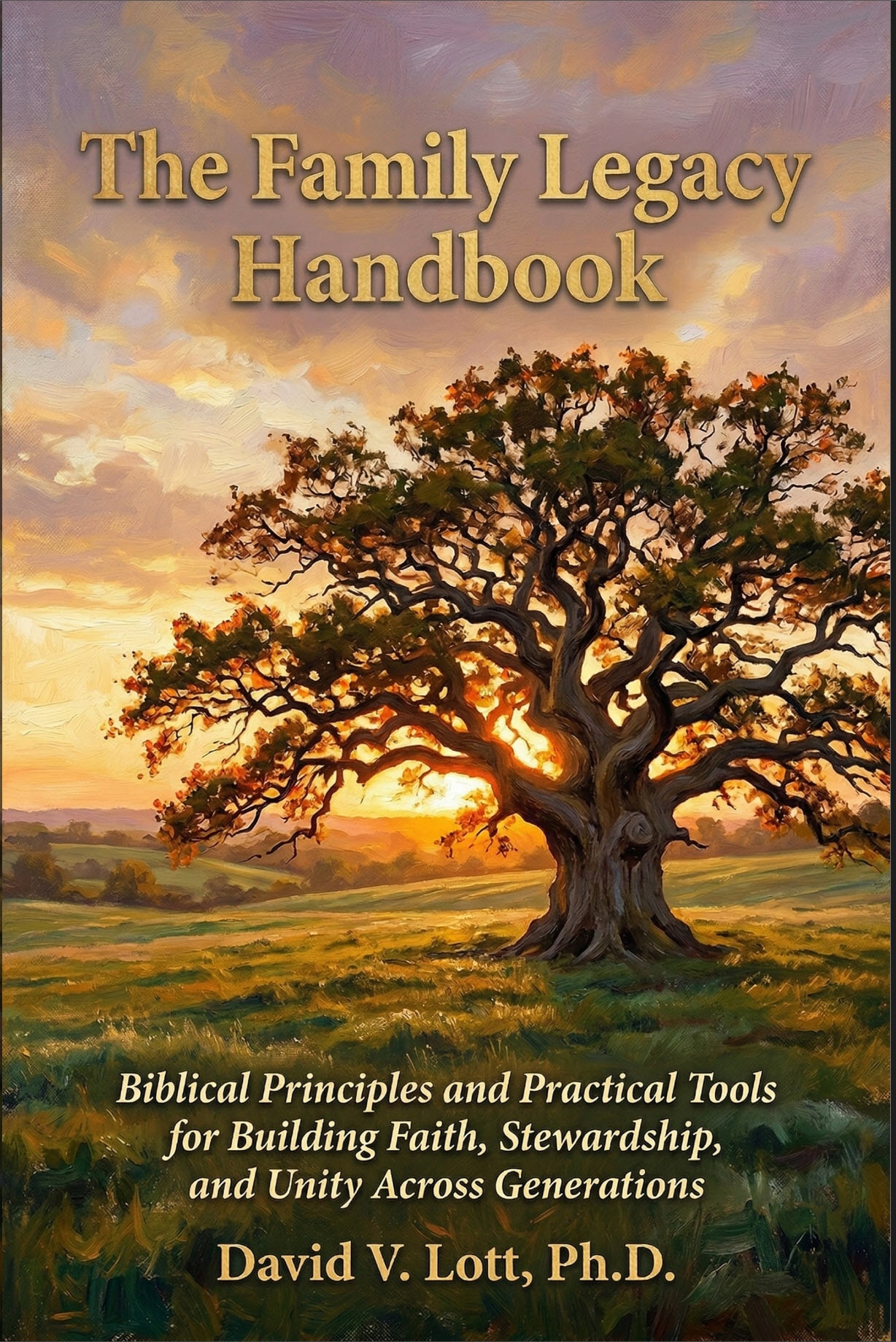
The Family Legacy Handbook
Biblical Principles and Practical Tools for Building Faith, Stewardship, and Unity Across Generations
Explore →
Why Did God Create Me?
The Biblical Answer to the Most Important Question You Will Ever Ask
Explore →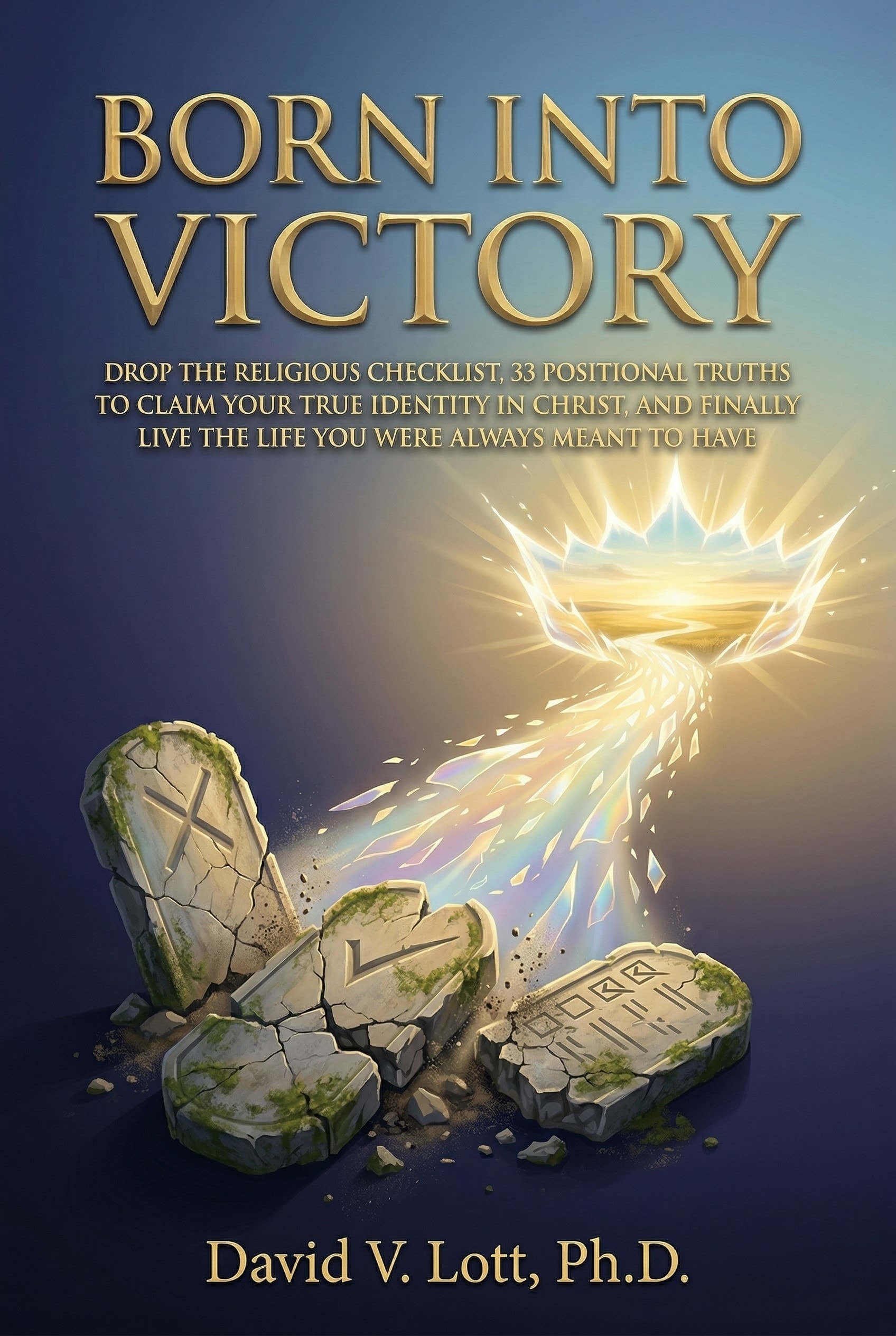
Born Into Victory
Drop the Religious Checklist, 33 Positional Truths to Claim Your True Identity in Christ
Explore →About the Book
Breaking the Shirtsleeve Curse
Passing the Torch Without Burning Down the House
David V. Lott, Ph.D.
Breaking the Shirtsleeve Curse examines why the wealth, businesses, and opportunities created by one generation so often fail to endure through those that follow. Moving beyond the mechanics of estate planning, the book considers the human side of succession: preparing heirs for responsibility, developing a stewardship mindset, transferring leadership gradually, navigating questions of fairness and family relationships, and helping founders learn when and how to relinquish control. Its purpose is not merely to preserve family assets, but to help families develop the wisdom, communication, responsibility, and shared purpose necessary for those resources to remain constructive across generations.
View Breaking the Shirtsleeve Curse on Amazon→